









Part of: Child Custody Specialists
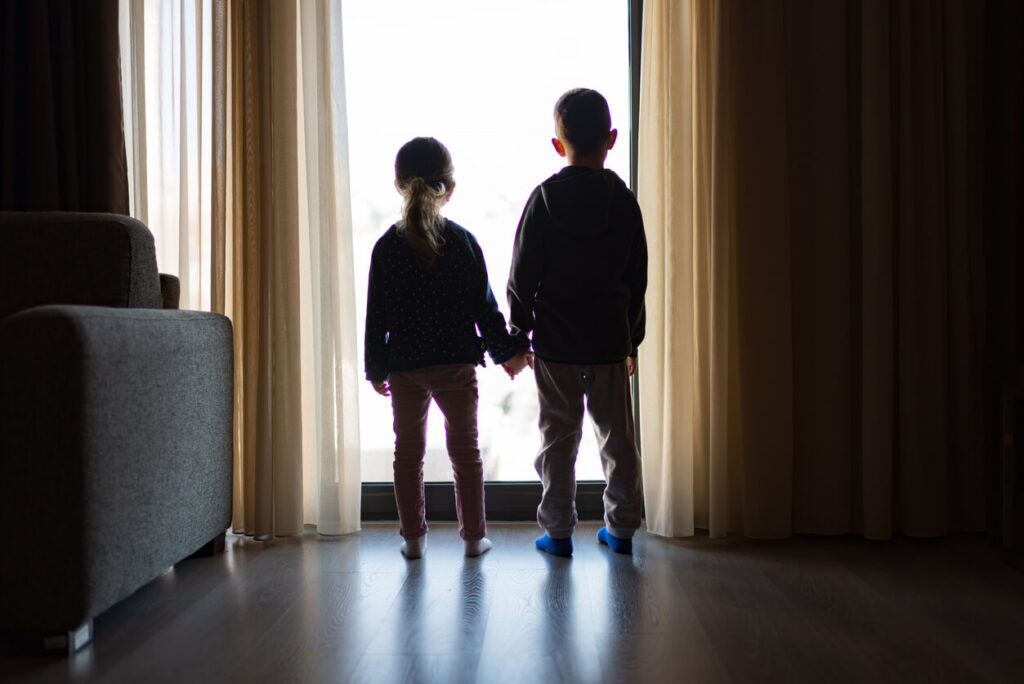
For many people around the world the beginning of the new decade with the year 2020 has been a year of turbulence, disruption, grief, sadness and uncertainty. COVID-19 has placed the world on hold and in lockdown. As well as adults children have also suffered at the hands of the virus as it has resulted in them in being deprived of access to both parents where the parents have separated.
COVID-19 and child arrangement uncertainties
In the UK the Government announced the lockdown on 23rd March 2020 with strict advice given to stay at home and to protect lives. The initial advice provided by the Prime Minister was uncertain as it didn’t address the issue of child parents. Many children in the UK are living in households where their parents have separated either under the same roof or in different households.
Essentially these children will have 2 households. The country was not clear on whether children would still be able to move between both households providing they can adapt to the government guidelines on social distancing and isolation.
Many parents adhered to these guidelines in the strictest sense by the resident parent not allowing their children to have physical contact with the non-resident parent. Such parents had to consider the risks of breaching existing child arrangement order which provided for contact with the other parent against the risk of children contracting the virus if they proceeded with existing arrangements. As well as parents who were left without child contact children were also suffering by not having contact with the non-resident parent.
Government provides clarity on COVID-19 guidelines and child arrangements
Following criticism for failing to provide clarity on how the COVID-19 guidelines affect children who are required to move between 2 households the Government responded by stating that where parents or someone with parental responsibility do not live in the same house, then in such cases children are allowed to move between their parents homes to adhere to existing arrangements for child contact and access.
Despite this new guidance many parents were still reluctant to allow children to move between households in order to take a cautious approach to protect their children from the deadly pandemic. As a result, many parents were working together in order to ensure their children remained safe and protected.
Our family lawyers found that many parents were able to mutually agree on altering child arrangement plans by providing alternative indirect forms of contact through video calls, telephone calls and emails.
Effects of school closures on child arrangements
On the 18th March 2020 the UK announced closures of all schools indefinitely with the exception for children of key workers. This announcement caused further confusion and uncertainty to children who have child arrangements in place. Quite often child arrangements between parents require the non-resident parent to collect children for their contact from school and to drop off the children to school when their contact is over.
This announcement affected children, physically, psychologically and emotionally as well as impacting parents. This meant children were not able to enjoy their time at school which caused some children with anxiety. It also affected children in terms of contact with their parents as they were not certain on whether their contact with both parents will continue and if so how. Parents were urged to work together in order to amicably reach an agreement between themselves on how child contact could take place. Despite many parents not being amicable following a separation and the thought of altering arrangements which may require to meet the other parent was deemed daunting and stressful.
Lockdown begins to ease in the UK
From the 1st June 2020 further measures were introduced to begin easing the UK out of the lockdown due to pandemic. The advice was that people in England would be allowed to meet in groups of six people in outdoor spaces or private gardens. Furthermore, children at schools will be permitted to return to school with a phased return.
This news was welcomed by many people who had been suffering directly or indirectly from the Corona Virus climate. Through this easing of the lockdown many parents and children have reunited following the commencement of the strict lockdown in March 2020. As things begin getting back to normality children and parents can begin to reap the benefits. Children are now able to meet with the other parent outdoor whilst enjoying quality time in the spring and summer season. Children are also able to live with the other parent in their residence provided there is no risk of them contracting the virus. Parents who have restricted contact of their child with the other parent should begin allowing contact in order to prevent further emotional and psychological damage to their children.
Support bubble and the UK lockdown
From the 13th June 2020 the government are introducing Support Bubble to further assist with the easing of the lockdown. The support bubble means that if you are living by yourself or are a single parent with dependant children you can expand your household to include one other household of any size.
The introduction of support bubbles will allow grandparents who live alone to form a bubble with their children and in effect resume contact with their grandchildren. The new relaxation rules will also allow a partner of a parent to spend the night together without having to worry about breaching the lockdown guidelines. Furthermore, parents who have separated but have children under the age of 18 can also operate in a bubble with another household.
As the Corona infection rates and deaths are on the incline the country is beginning to move towards normality. As a result, provisions are being made to allow parents and children who were separated to continue with their child contact arrangements.
Our family lawyers believe this will help reduce stress, anxiety, depression and isolation which was suffered by many parents and children across the country. Parents should allow their children contact with the other parent providing they are not likely to contract the virus.
Despite the easing of lockdown, I am still without contact with my children, what can I do?
Although most parents have worked together during the difficult time to ensure child contact is not affected, some parents may still be reluctant in allowing child contact and breaching existing agreements and child arrangement orders.
Unless there is a clear risk of harm to children with the existing arrangements the government lockdown rules do not allow for parents or children to be deprived of contact.
If you are in a difficult situation where the resident parent is being unreasonable in refusing to allow you contact then you should seek legal advice in order to try and resolve your family dispute.
At Kabir family law our child law specialists can help you secure access, particularly through these tough times. Arrange a free consultation for legal advice by calling us on 0330 094 5880or letting us call you back. With family lawyers in Northampton as well across the UK, we are proud have the national strength to serve clients across the country.