
 By










Family law guide
Part of: How to apply for Parental Responsibility
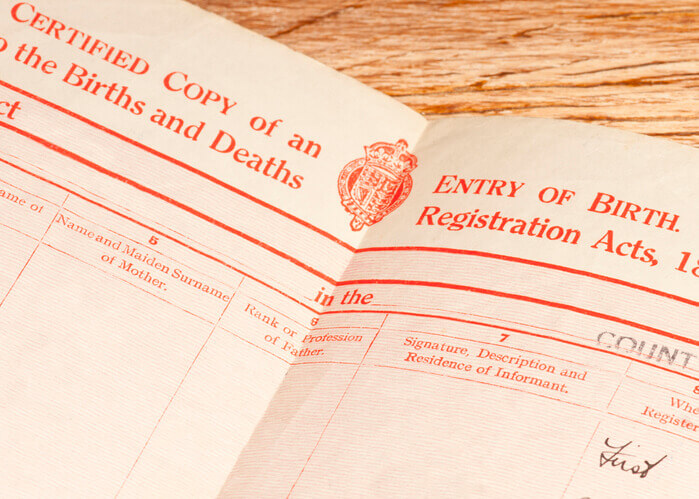
A full birth certificate is an official copy of the whole entry in the birth register, including the parents’ details. The short version shows only the child’s own details. By law it cannot show anything about parentage or adoption (Births and Deaths Registration Act 1953, s.33). Only the full version shows who the register names as a parent, so it is the one family matters turn on.
This guide is for parents in England and Wales who need the full version. A passport application, a child’s change of name or a question about parental responsibility are the usual reasons. It explains what the certificate shows, when a family matter needs it, how to order one and what happens to it after a re-registration or a correction. If a name on the certificate is wrong, our guide to removing a name from a birth certificate covers that process.
Key takeaways
- There are two types of birth certificate. The short one has only the baby’s details and the full one also has the parents’ details. After you register the birth, you can buy either type for £12.50 (GOV.UK).
- A copy from the General Register Office costs £12.50, and the GRO sends it 4 days after you apply if you have the GRO index reference number. Without it, each search costs £3.50 extra and the GRO sends the certificate 15 working days after you apply (GOV.UK).
- A child’s first passport application by post needs the full birth or adoption certificate. The passport office refuses photocopies, even certified ones (GOV.UK).
- An unmarried father registered as the father on or after 1 December 2003 has parental responsibility (Children Act 1989, s.4(1)(a)).
- After a correction, every full certificate carries a note in the margin. A short certificate shows only the corrected details (GOV.UK).
Has the certificate raised a question about who has a say in your child’s life? You can book a free initial consultation with one of our family law specialists.
What is a full birth certificate?
It is a certified copy of the complete register entry for a birth in England or Wales, with the parents’ details as well as the child’s. People also call it the long-form or long birth certificate, and GOV.UK calls it “the full version”.
The entry records what the person registering the birth told the registrar. GOV.UK lists the details to have ready: the place and date of birth, the baby’s name, surname and sex, the parents’ names, surnames and address, their places and dates of birth, the date of their marriage or civil partnership, their jobs and the mother’s maiden surname (GOV.UK, register a birth). However, not every entry holds all of these. It depends on who registered the birth and whether both parents signed the register.
How can you tell which version you have?
First, look for the parents. If the certificate gives only the child’s name, surname, sex and date of birth, with nothing about a mother or father, you hold a short birth certificate. The 1953 Act forbids parentage or adoption details on a short certificate, so a short one can never answer a question about who the parents are.
Full vs short: what is the difference in practice?
The short certificate proves that a child exists and when they were born. The full certificate also shows who the register names as the child’s parents, which is why passport, name-change and parental responsibility questions all turn on it.
| Question | Short certificate | Full certificate |
|---|---|---|
| Whose details are on it? | The child’s only (s.33) | The child’s and the parents’ (GOV.UK) |
| Does it show who the register names as father? | No | Yes, if the register names him |
| Does it show a correction? | Only the corrected details, with no note | The original entry and a note in the margin (GOV.UK) |
| Child’s first passport by post | Not the document asked for | Required, or the full adoption certificate (GOV.UK) |
| Enrolling a deed poll for a child | Not the document asked for | You need a copy (GOV.UK) |
| Cost of a copy from the GRO | £12.50, or £38.50 for the priority service | £12.50, or £38.50 for the priority service |
When does a family matter need the full birth certificate?
Whenever someone needs to see who the register names as the child’s parents. In family matters, for example, that usually means a child’s passport, a change of name or proof of parental responsibility.
A child’s first passport
A person with parental responsibility must apply, and both parents’ details go on the form. On a postal application you send the child’s full birth or adoption certificate, as an original or official copy, together with any court orders about the child, such as one that sets out parental responsibility (GOV.UK, first child passport). If the child’s name no longer matches the certificate, you also send a deed poll, a signed letter from everyone with parental responsibility agreeing to the new name and the passport, and at least one record showing the new name in use, such as school or NHS records.
An adopted child has an adoption certificate, and the passport office accepts the full adoption certificate in its place. If a court has made a special guardianship order or any other order about the child, the passport office asks for that order too.
What the Deed Poll Office asks to see
To put a child’s new name on public record, you enrol the deed poll with the High Court for £53.05. You need a copy of the child’s full certificate, plus either the agreement of everyone with parental responsibility or a court order (GOV.UK, change a child’s name). The certificate often tells a parent whose agreement they need. Our guide to changing a child’s name in England and Wales covers disagreements and court applications.
Showing who has parental responsibility
An unmarried father gets parental responsibility by being registered as the father (Children Act 1989, s.4(1)(a)). That rule only covers registrations made after it came into force on 1 December 2003. A father registered before then does not get parental responsibility from the register alone (Adoption and Children Act 2002, s.111(7)). As a result, the registration date matters as much as the name, and only the full birth certificate shows the father’s name at all. In addition, schools, doctors and other organisations ask for different evidence, so see our guide to proof of parental responsibility for the documents each one accepts.
Look for a note that the birth was re-registered under section 14A of the 1953 Act, which follows a court declaration of parentage. That route is not one of those listed in section 4(1A) of the Children Act 1989. HM Passport Office guidance says such a certificate does not give the parent it added parental responsibility (HMPO, birth registration). Our guide to a declaration of parentage explains what that order does.
How do you order a full birth certificate in England and Wales?
Order it online from the General Register Office (GRO), by phone, by post, or from the local register office where the birth was registered. A GRO certificate costs £12.50, and extra copies cost the same (GOV.UK, order a certificate).
- Register on the GRO website. GOV.UK says it takes around 10 minutes and you need a debit or credit card.
- Next, give the GRO index reference number if you have it. With it, the GRO sends the certificate 4 days after you apply.
- Without the reference, you pay £3.50 extra for each search, and the wait grows to 15 working days.
- If you need it sooner, the priority service costs £38.50, and the GRO then sends it the next working day if you order by 4pm.
- If the certificate is for a passport application, you can have it sent straight to HM Passport Office with your application reference, which usually starts with “PEX”.
A replacement birth certificate is simply another copy of the same entry, so a lost certificate costs the same as a first copy. GOV.UK points to a different process for certificates from Scotland and Northern Ireland.
What changes on the certificate after re-registration or a correction?
The certificate you hold never changes. A re-registration creates a new entry in the register and a correction adds a note in its margin, so you buy a new certificate to show either.
When unmarried parents registered a birth without the father, it may be possible to add him later through re-registration (GOV.UK). Our guide on whether a father can put himself on the birth certificate explains the routes and the cost. A full certificate from a re-registered entry carries the words “On the authority of the Registrar General” after the date of registration.
Parents who marry each other or form a civil partnership after the birth must re-register it. The re-registration is free, though new certificates cost the usual fee (GOV.UK, form LA1). Since 13 July 2026 it no longer changes the child’s surname, so a new surname needs a deed poll (HMPO, birth registration). Our guide to changing a child’s name covers that step.
How a correction shows on a full certificate
The original entry always stays in the register and a note is added in the margin. Every full certificate issued afterwards shows both the original information and that note, while a short certificate shows only the corrected details (GOV.UK, correct a birth registration). A parent who has had the wrong father’s details corrected may prefer the short version where an organisation accepts it.
We advised a father who had separated from his daughter’s mother and heard she planned to change the girl’s surname. The only certificate he had ever seen was the short one, which said nothing about either parent, and he could not remember whether he had signed the register. We explained that he could order a copy of the full certificate from the General Register Office himself. It showed him registered as the father, years after December 2003. That meant he had parental responsibility, so the name could not be put on public record by enrolled deed poll without his agreement or a court order. He went into the next conversation with the mother knowing where he stood, which made it calmer for both of them. What happens in any case turns on its own facts.
Full birth certificate or short one: which do you need?
You need the full one whenever someone has to see the parents’ details, as for a child’s first passport, a deed poll or a question about parental responsibility. Two answers show what to send, a common mistake and the question you may need advice on. This page does not send or store anything you choose.
0 of 2 answered
Answer both questions to see which certificate you need
- What to sendThe document this purpose asks for.
- Where people go wrongThe step that most often causes a delay.
The question this chooser cannot answer The judgement call behind your situation.
Expert Tip
When a certificate comes up in a dispute about a child, order your own copy rather than relying on the one the other parent holds. Read the registration date as carefully as the names, because for an unmarried father it decides whether being on the certificate gave him parental responsibility. Keep the certificate with any court orders about the child, since the passport office and the courts often ask for both together.
Hannah Overton, Complex Children Specialist & Client Support
Full birth certificate: frequently asked questions
Do I need a full birth certificate for a passport in the UK?
For a child's first passport applied for by post, yes. GOV.UK asks for the child's full birth or adoption certificate, the one with the parents' details on it, as an original or official copy (GOV.UK). If you apply online, the service tells you which documents to send.
What's the difference between a birth certificate and a full birth certificate?
"Birth certificate" covers both versions. The short one shows only the child's details, and the law says it cannot include anything about parentage or adoption. The full one is a copy of the whole register entry, including the parents (Births and Deaths Registration Act 1953, s.33).
How long does it take to get a copy from the GRO?
With the GRO index reference number, the GRO sends the certificate 4 days after you apply. Without it, you wait 15 working days. The £38.50 priority service sends it the next working day if you order by 4pm (GOV.UK).
Will a correction show on a short certificate?
No. A short certificate shows only the corrected details, with no note. Full certificates issued after a correction show the original entry and a note in the margin explaining the change (GOV.UK).
Is the process the same for a birth registered in Scotland or Northern Ireland?
No. The General Register Office service covers births registered in England and Wales. GOV.UK sends you to a different process for certificates from Scotland and from Northern Ireland (GOV.UK).
Asked for a full birth certificate in a dispute about your child?
A dispute over a certificate is usually about what it reveals: a father who was never registered, a registration from before December 2003, a name change the other parent has not agreed to, or a correction that now shows in the margin. Acting on the wrong assumption about parental responsibility can stall a passport application or a change of name.
A free initial consultation is a conversation with a specialist. They give you initial advice tailored to your circumstances, including who has parental responsibility on the facts you describe. It does not include drafting or reviewing documents.
Book a free initial consultation or call 0330 094 5880.
You can also read our guides to changing a child's name and proof of parental responsibility, or return to our guide to removing a name from a birth certificate.
General information about the law in England and Wales, not advice on your circumstances.













